
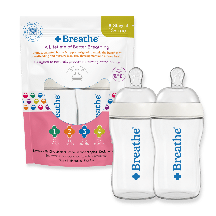
Protected: Breathe® Complete Bottles
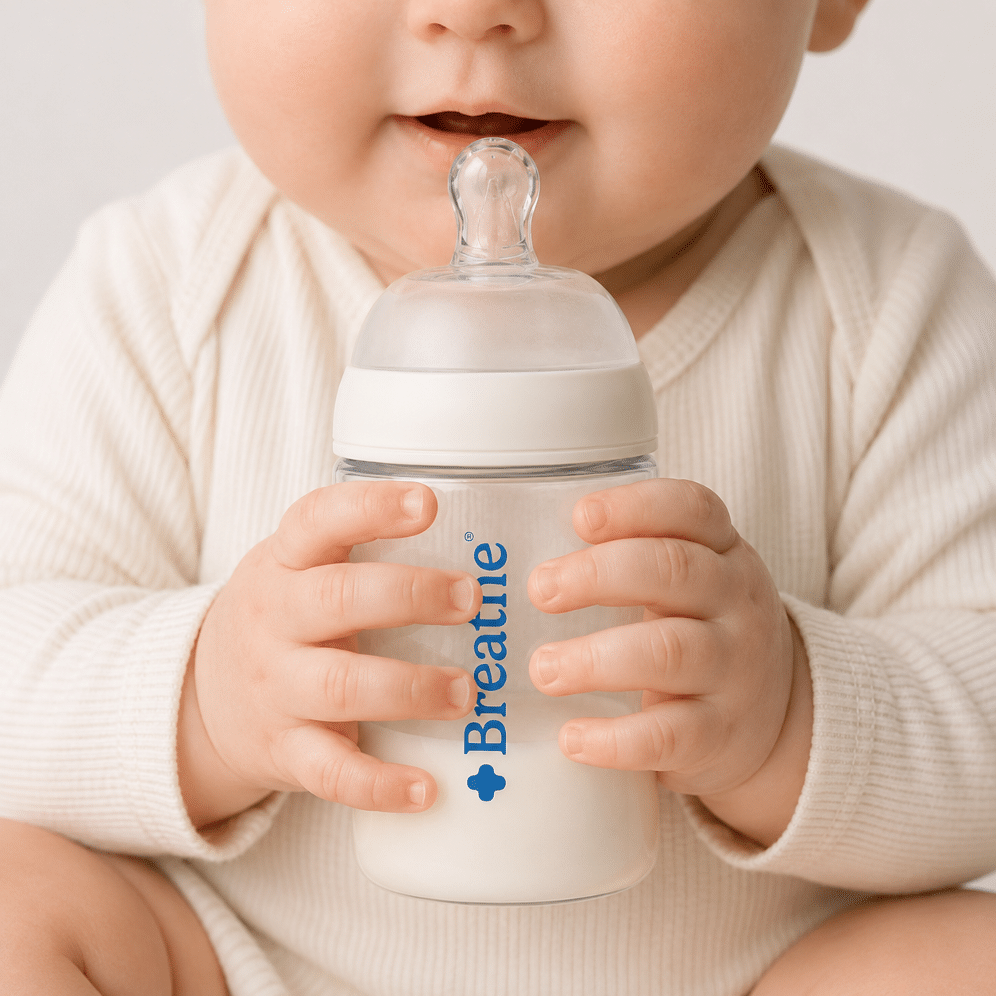
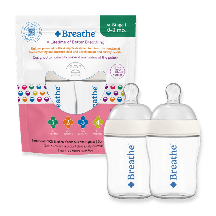
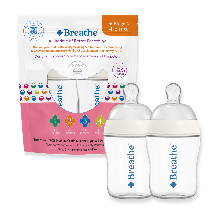
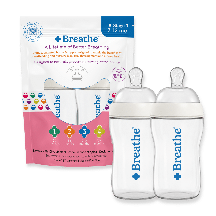
Our complete bottle pairs an easy-to-use bottle with the Breathe® Bottle Nipple to support more natural feeding mechanics.
Study: Breastfeeding’s Relation to Facial Profile, Occlusion, and Spacing
Key Points
- Breastfeeding is not mere nutrition and can be considered as a natural orthopedic device for the harmonious development of the face.
- The upward and outward forces exerted by the tongue during suckling affect the growth of a child’s upper and lower jaws.
- The importance of increased breastfeeding duration in preventing the development of misaligned teeth and jaws, enhancing the growth of the jaw, and establishing proper alignment of the teeth by stimulating the facial muscles during suckling have been well documented in the literature.
- BPA and Latex Free
- Dishwasher Safe
- Designed with clinician input
- Available in four progressive stages.
$19.99
Select Your Baby’s Stage:

Designed to Support Healthy Feeding From the Start
The Breathe® Complete Bottle combines our specially designed Bottle Nipple with a comfortable, easy-to-use bottle to support natural movement, active feeding and healthy oral and facial development.


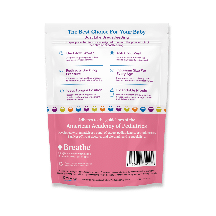
Stretches + Rebounds During Feeding
Allows the nipple to extend and retract during feeding, supporting natural oral movement and healthy muscle engagement.

Anti-Colic Valve
Helps minimize air intake during feeding to reduce gas and discomfort.

Encourages Active Feeding
Encourages your baby to actively draw milk rather than relying on passive flow, supporting coordination and healthy oral muscle development.
Study: Breastfeeding and Jaw Development
Key Points
- You may be able to prevent the need for orthodontics by breastfeeding.
- Somewhere between 25-50% of children require braces or other orthodontic treatment during childhood.
- Research in the past few decades suggests that breastfeeding can promote proper jaw development and orthodontic growth. In other words, breastfeeding can help your child’s teeth grow in straight, without crowding.
- During infancy, a baby’s soft palate is soft and “wax-like.”
- Breastfeeding supports good jaw development because of the unique way it encourages the tongue to press against the soft palate of the mouth.
- Bottle feeding does not cause the same action, which is why children who are exclusively bottle-fed have a much higher risk of orthodontic issues.

Progressive Sizes
Four progressive nipple stages are designed to match your baby’s changing size, strength and feeding ability.
Designed to work as part of the Breathe® System.
See Patent Information
Patents
The granting of multiple United States and International patents underscores how unique Breathe pacifiers and bottle nipples are. No other pacifier or bottle nipple is designed to offer all the vitally important benefits Breathe offers your baby. Now that you can provide your baby with essential physical development benefits previously only available by breast feeding, why use any other pacifier or bottle nipple? Optimum sizes for every stage of growth.
U.S. Patent No. 12,109,174 B2 Date of Patent: Oct. 8, 2024
U.S. Patent No. 10,555,876 B1 Date of Patent: Feb. 11, 2020

Better Together From the Start
Designed to Work Together
The Breathe® System brings feeding and soothing together through products built around the same developmental principles. From the Bottle Nipple’s active feeding mechanics to the Pacifier’s oral positioning, each product is designed to support natural movement, healthy oral and facial development, and your baby’s changing needs as they grow.
Study: High/Narrow Palates a New Risk Marker
Key Points
- This study suggests that a high proportion of the children deceased from SUDI (Sudden Unexpected Death in Infancy) had a facial structure that seemed to be different. Specifically, a hard palate that was significantly higher and narrower than in the living children in the study.
- High/narrow palates could be a sign of OSAs and a narrow structure of the facial upper airways and thus a supplementary risk factor for SUDI.
- A more thorough screening for craniofacial growth abnormalities may help to determine their possible involvement in breathing disorders during sleep and avoid premature deaths in very young children.